For many women around the world, the internet has become a normal part of everyday life. We use our phones to work, study, shop, run businesses, stay connected with family and friends, learn new things, and sometimes simply take a break from a busy day.
The digital world has given women opportunities that were difficult to imagine a few decades ago. But along with those opportunities have come new risks that deserve our attention.
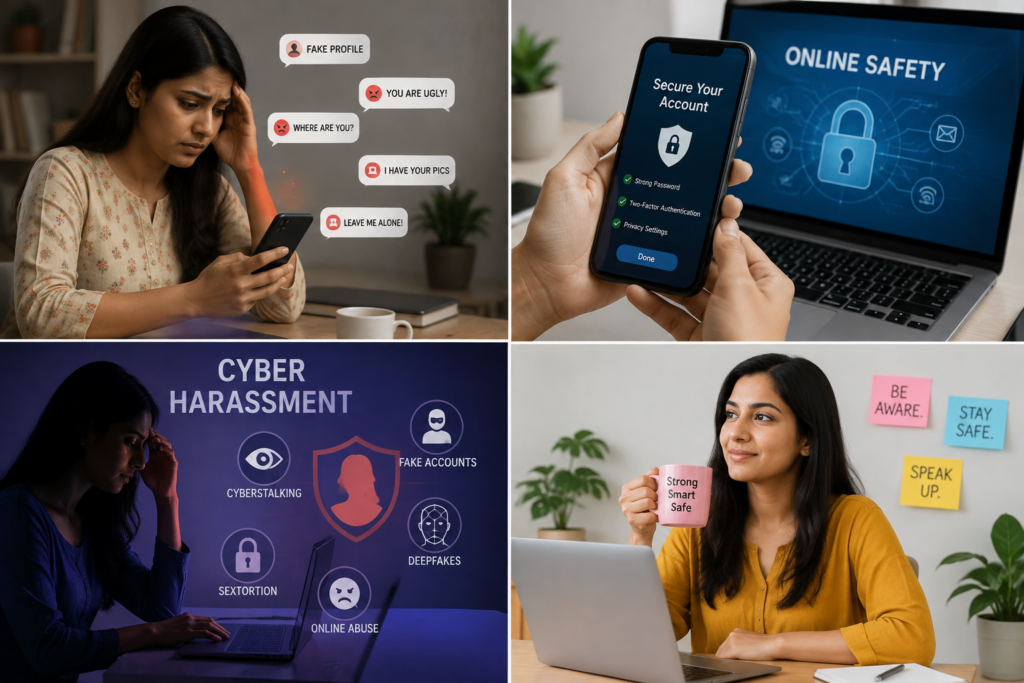
Online harassment, fake profiles, cyberstalking, blackmail, deepfake images and the misuse of private photographs are becoming increasingly difficult to ignore. These problems can affect any woman, regardless of her age, profession, background or where she lives.
When Online Harassment Becomes Real-Life Fear
We often think about safety in terms of where we go and who we meet. But today, our digital spaces are part of our lives too, which means our online safety matters just as much.
Imagine discovering that someone has created a fake social media account using your photographs. Or receiving repeated messages from someone who monitors your activity, contacts you constantly and refuses to respect your boundaries.
For some women, online harassment can become even more serious when someone threatens to share private photographs, spreads personal information or uses manipulated content to embarrass or blackmail them.
This is why online harassment should never be dismissed as “just something happening on the internet.”
The screen may be digital, but the fear, stress and emotional impact can be very real.
The Growing Concern Around Deepfakes
Artificial intelligence has brought countless useful tools into our lives. It can help us work, learn, create and communicate faster than ever before.
But powerful technology can also be misused.
Deepfake technology can create photographs, videos or audio that look and sound surprisingly realistic. A woman’s face can be manipulated and placed into content she never created or agreed to.
One of the biggest problems is how quickly manipulated content can spread online. Once something is shared, controlling where it goes can become extremely difficult.
Even when everyone eventually discovers that the content was fake, the woman involved may still experience embarrassment, emotional distress, damage to her reputation or threats from someone attempting to exploit the situation.
This is why digital awareness is becoming an important part of women’s safety.
Protecting Your Privacy Doesn’t Mean Living in Fear
Being careful online does not mean women should stop using social media, hide their personalities or become afraid of technology.
It simply means knowing where to draw the line.
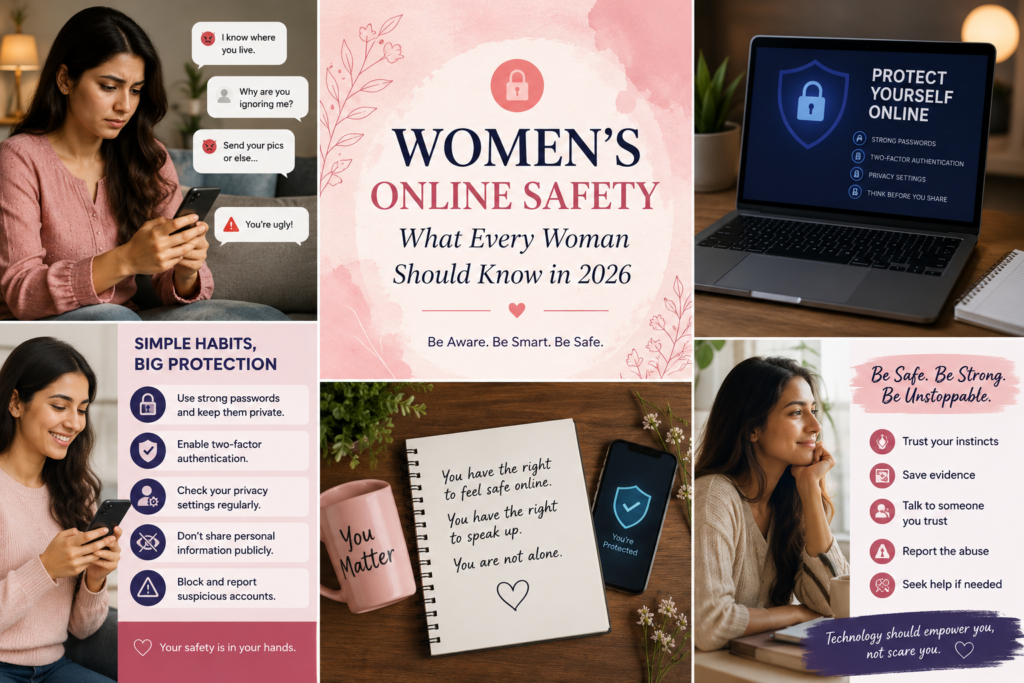
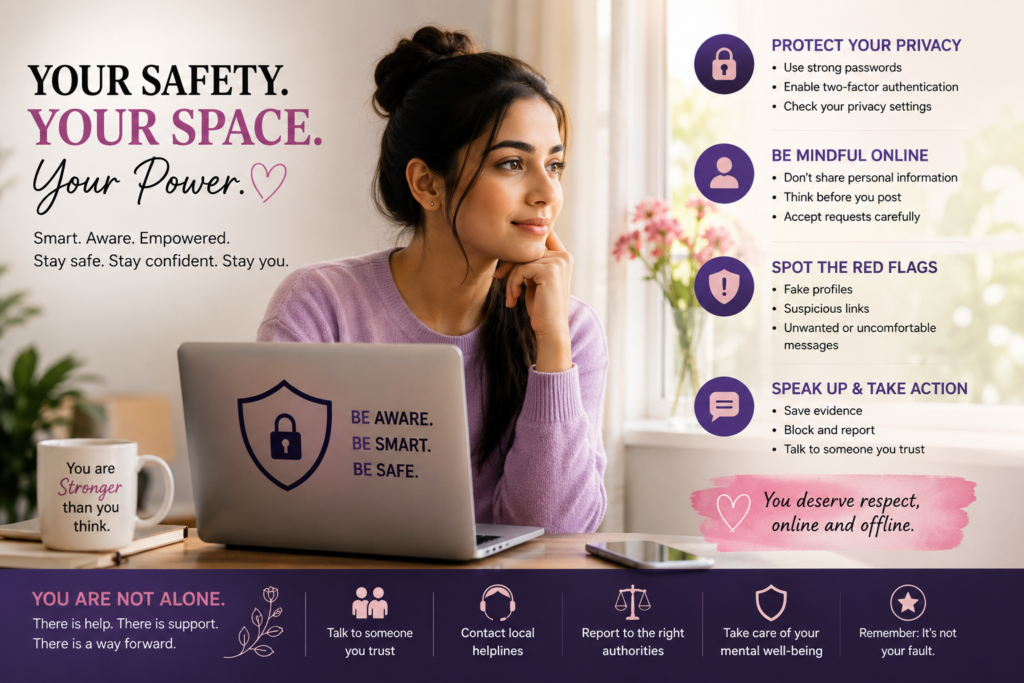
A few simple habits can make a meaningful difference. Use strong and unique passwords for important accounts and enable two-factor authentication whenever possible. Review your privacy settings regularly and think carefully before sharing information such as your home address, daily routine, workplace details or other personal information publicly.
It is also worth being cautious when accepting strangers online.
A convincing profile picture, mutual followers or a friendly conversation do not necessarily tell you who is really behind an account.
Trust should be earned, both online and offline.
What Should You Do If Someone Harasses You Online?
The first thing is simple:
Don’t panic, and don’t blame yourself.
If someone is threatening or harassing you, save screenshots, messages, usernames, links and other evidence. Avoid deleting important information in frustration, especially when threats or blackmail are involved.
You can block and report abusive accounts, review your account security and change your passwords if necessary.
It can also help to tell someone you trust. You do not have to carry the situation completely on your own.
If the harassment involves serious threats, blackmail, intimate images, stalking or persistent abuse, consider reporting it through the appropriate cybercrime or law-enforcement channels in your country.
Asking for help is not weakness.
Sometimes, asking for help is simply the smartest and safest decision you can make.
Women Shouldn’t Have to Leave the Internet to Feel Safe
There is an important difference between being careful and being restricted.
Women should not have to stop sharing their ideas, building businesses, studying online, creating content or connecting with others simply because some people misuse technology.
The responsibility should not always fall on women to make themselves invisible.
Women deserve to participate in digital spaces without being told that the solution is to disappear from them.
Technology should create more opportunities for women, not another reason for them to feel unsafe.
Digital Boundaries Are a Form of Self-Respect
We often talk about boundaries in relationships, friendships and workplaces, but digital boundaries matter too.
You are allowed to ignore a message.
You are allowed to block someone.
You are allowed to remove a follower.
You are allowed to keep parts of your personal life private.
And you never owe someone access to your photographs, conversations, location or personal information simply because they ask for it.
Being available online does not mean being accessible to everyone.
A Safer Digital Future for Women
Women everywhere are using technology to build careers, start businesses, study, create content, connect with communities and discover opportunities that previous generations may not have had.
That progress matters.
But true digital empowerment is not simply about having access to a smartphone or the internet. It also means having the knowledge and confidence to protect your privacy and respond when something goes wrong.
Every woman deserves to feel that she can use technology without constantly worrying about who might misuse her information.
The internet should be a place where women can learn, earn, create, connect and express themselves freely.
Being visible online should not mean sacrificing your privacy.
Being confident should not mean ignoring your safety.
And being careful should never mean making yourself smaller.
Technology should empower women, not scare them.